20250531
International Day of United Nations Peacekeepers - Press Conference | United Nations
On the International Day of United Nations Peacekeepers, marked today (29 May) Peacekeeping Chief Jean-Pierre Lacroix said, “we are committed to maximising our own cost effectiveness,” but at the same time, he said “it is imperative that peacekeeping should be provided with the resources that are needed to deliver on the mandate.” Speaking to reporters in New York, Lacroix said the 2025 UN Peacekeeping Ministerial in Berlin brought together “more than 150 delegations,” 60 of them at ministerial level. He said there “many expressions of support,” as well as “many pledges that were made to support peacekeeping.” The main takeaway, Peacekeeping Chief was that “peacekeeping remains very strongly supported by Member States.” He said, “we have a great amount of work to do to operationalise all the commitments and also to continue with the many bodies of work that we're currently working on in different areas, such as safety and security of peacekeepers; performance; conduct and discipline; relation with the host government; how to introduce and make the best possible use of digital technology in peacekeeping and so many other bodies of work.” Lacroix said, “Member States requested a broad review of all peace operations at the Summit for the Future last September. And we're currently working on this with our sister department, the Department of Peacebuilding and Political Affairs. And, of course, we are working to operationalise UN80 initiatives, the Secretary-General initiative, within the peace and security pillar.” Faced with financial constraints, he said, “peacekeeping is constant adapting” and “looking for innovative ways to deliver while remaining both an effective and really a low cost option compared to many other multinational deployments.” Lacroix stressed that “we are committed to maximising our own cost effectiveness, but at the same time, we want to insist that it is imperative that peacekeeping should be provided with the resources that are needed to deliver on the mandate.” Responding to a reporter’s question on the matter, he said, “I think it's clear that most of our top financial contributors have constraints in terms of their public finances. Now, of course, we expect all of them to pay what they have to pay on time and in full, but at the same time, we live in a real world, and we know what those constraints are. So, we want to have a very productive dialogue with them, in addition of course to making sure that as far as we're concerned, we work on cost effectiveness.” Later in the day, Secretary-General António Guterres laid a wreath to honour the more than 4,400 United Nations peacekeepers who have lost their lives in the line of duty since 1948. During an awards ceremony at the ECPOSOC Chamber, Guterres said, “over the decades, more than 2 million women and men have served in 72 UN missions across four continents. And I'm deeply grateful to all Member States for these invaluable contributions. In the communities and countries in which they serve, UN peacekeepers are an important symbol of the United Nations at its best. And together, they've helped improve millions of lives, protecting people, preserving peace and providing hope, rebuilding infrastructures, repairing institutions, and ensuring life-saving assistance. With their support, nations around the world have made the transition from war to peace.” The Secretary-General presented awards to the Military Gender Advocate of the Year, Squadron Leader Sharon Mwinsote Syme of Ghana and the UN Woman Police Officer of the Year, Superintendent Zainab Gbla of Sierra Leone. Both of them serve with our peacekeeping mission in Abyei.
For more information or to watch video on YouTube, click here!

Subscribe to:
Post Comments (Atom)
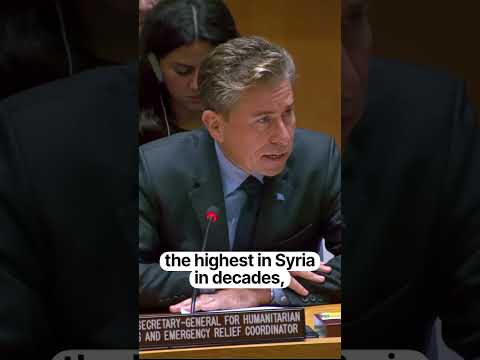
Historic return of millions of Syrian #refugees #Syria
Briefing by Tom Fletcher, Under-Secretary-General for Humanitarian Affairs and Emergency Relief Coordinator, Office for the Coordination of...
-
Produced by LastWeekTonight This episode features: S13 E18: Trump & Crypto, Buc-ee’s: 7/26/26: Last Week Tonight with John Oliver For...
-
Produced by LastWeekTonight This episode features: S10 E21: Elon Musk & Season Finale: Last Week Tonight with John Oliver For more in...


No comments:
Post a Comment